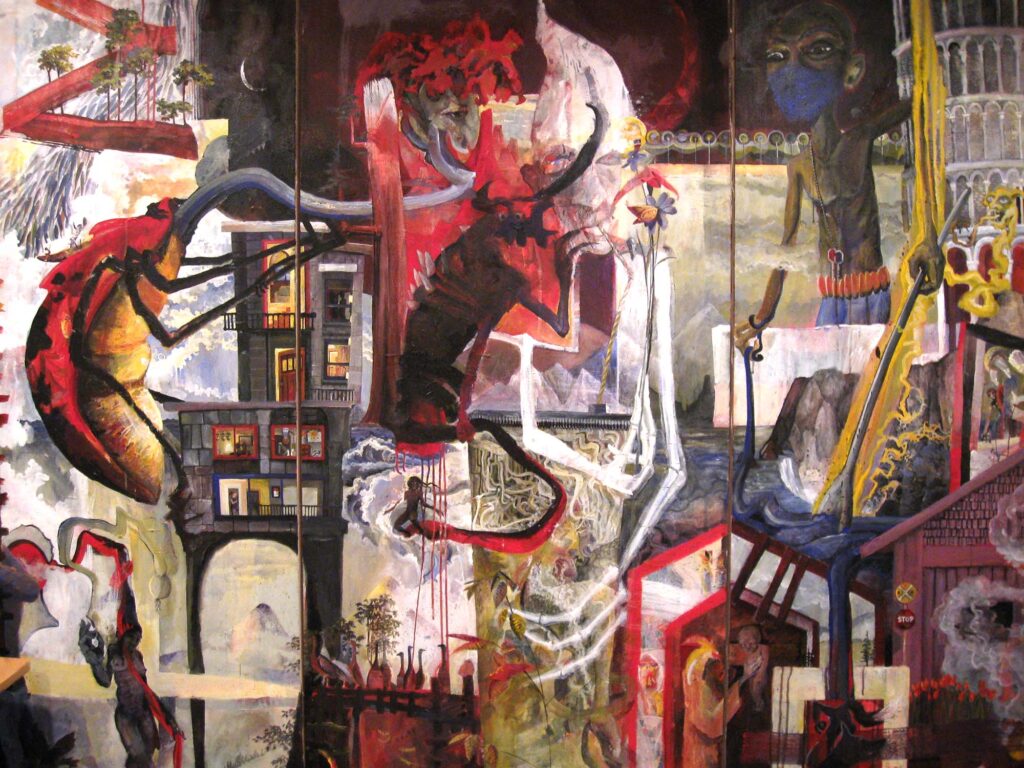
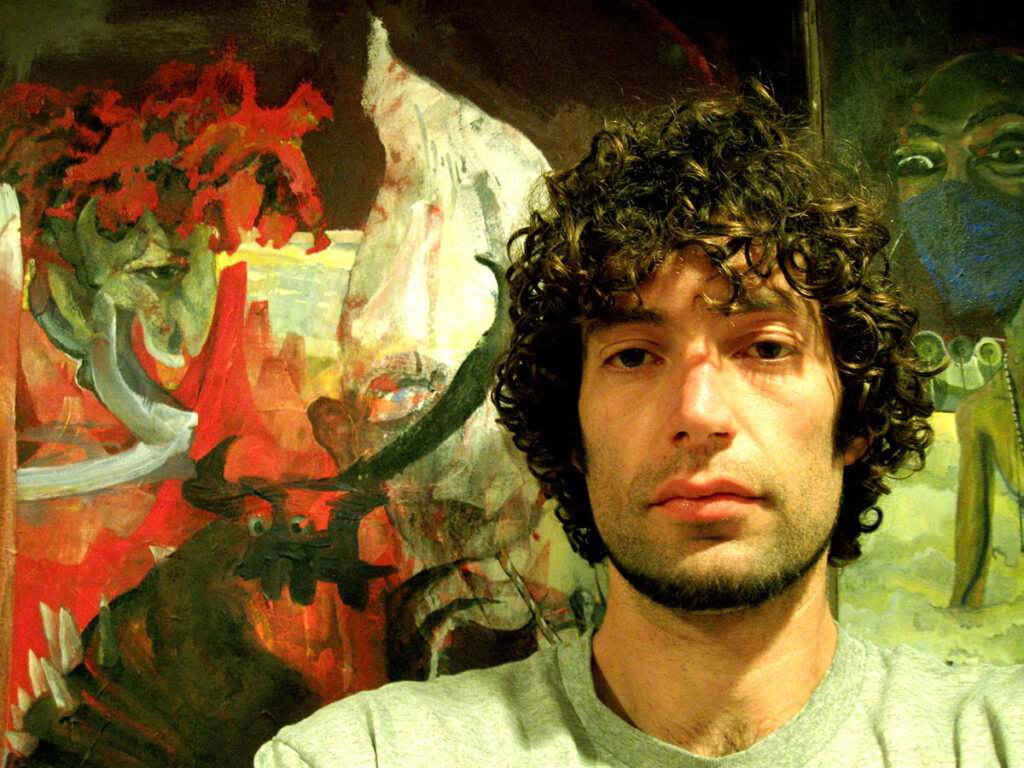
Demon Dream is a triptych painting on canvas panels. They are over six feet tall. I don’t remember the exact dimensions. They’ve been in storage for years.
I painted this while planting trees for a farmer near Elkton, Oregon. The farmer was a quiet man, religious, with serene blue eyes. He handed me a cold steel shovel me and pointed at a steep hillside of scarred earth towering a thousand feet above the river. “I need you to plant that,” he said. We looked up at the looming hillside and had a rueful little laugh at the absurdity of the task. I stayed in an old abandoned farmhouse at the foot of the hill with no TV. To pass the time in the evenings, I painted Demon Dream.
To start this painting, I filled the canvas with random colors quickly and chaotically. Once I had this random field in place I allowed the basic shapes and forms to create images in my mind, then I simply accentuated and refined those images. I tried to keep as many raw brush strokes intact as possible to create a spontaneous and dreamlike piece. It took me all winter and spring to plant that hill but I got it done.
NECTAR FOR THE GODS
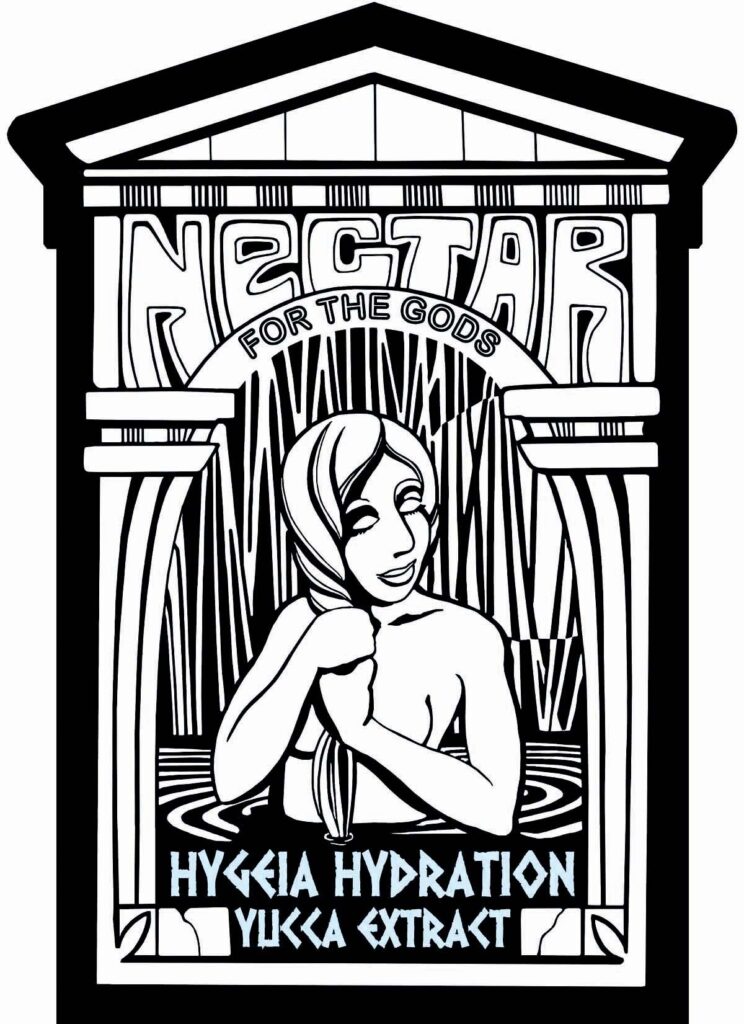
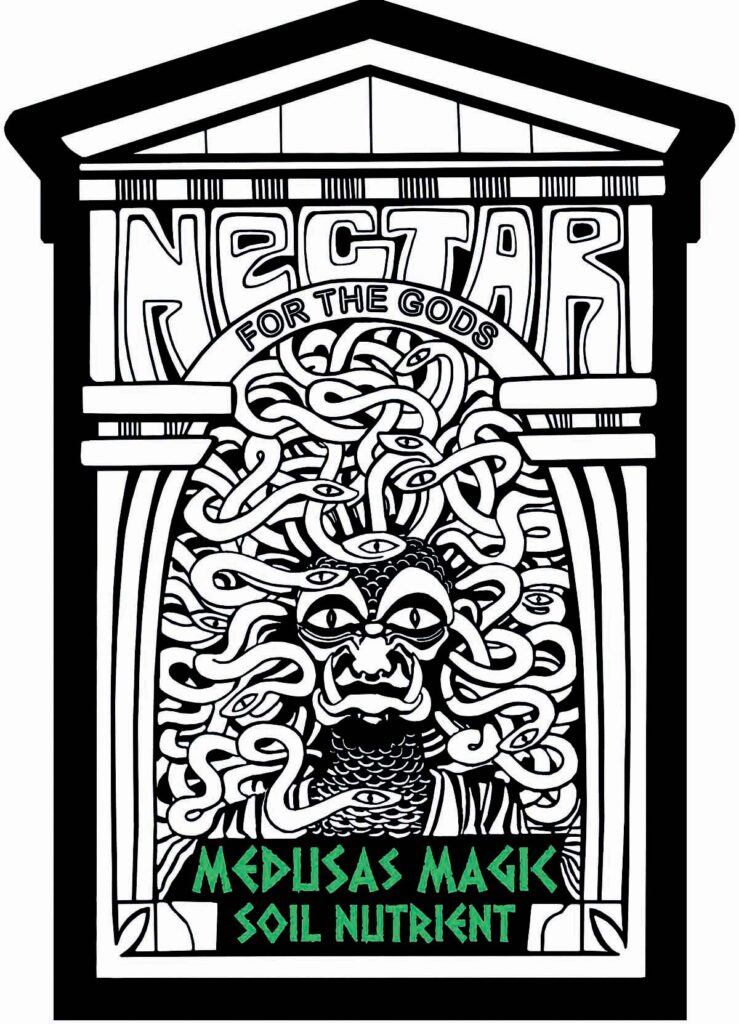
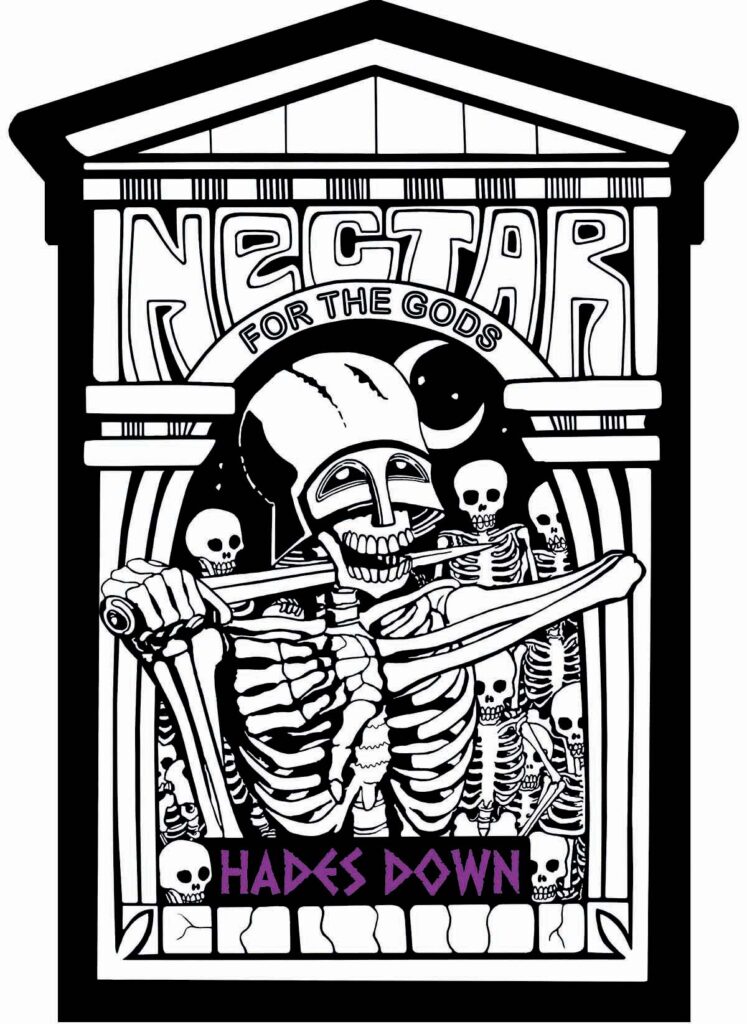
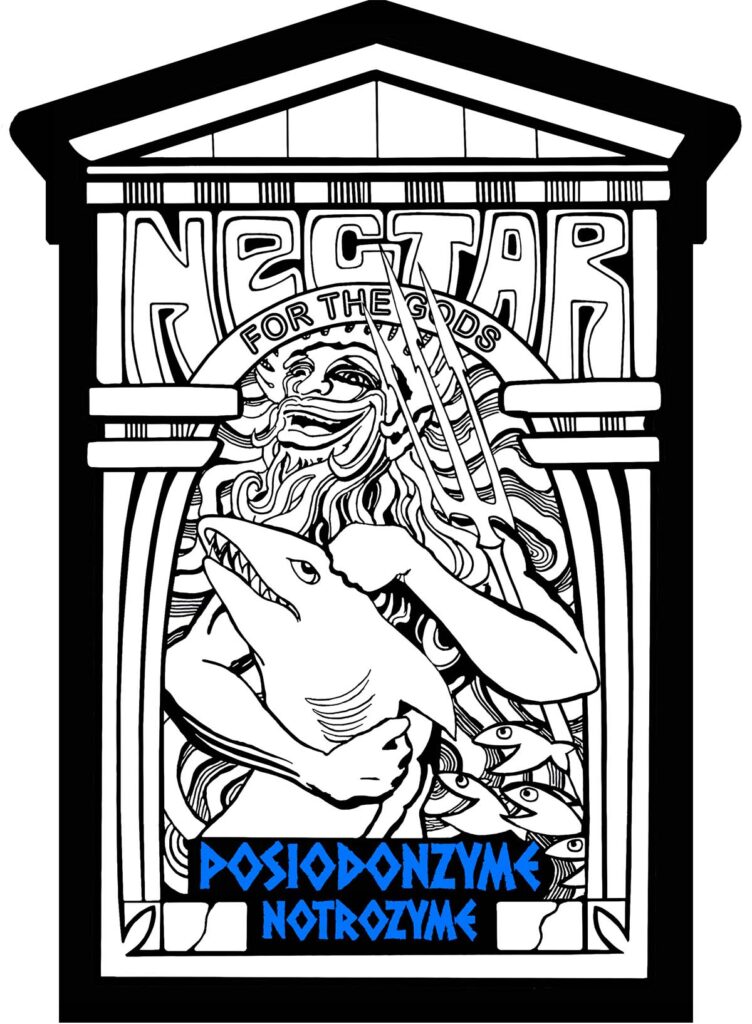
This project began with a bit of serendipity. A plant nutrient company based in Eugene, Oregon held a contest to name a new line of products. A friend of mine won the contest with his submission, “Nectar of the Gods.” The owner of the company asked him if he knew anybody who could design labels and my friend recommended me. I met with the owner who presented a long list of products and said he wanted each one to be represented by a Greek God. He didn’t say much else besides, “You’re the artist. Go for it.” I’d never drawn a label before, but the trust he showed in me was amazing.
NECTAR LABELS
CATALOG
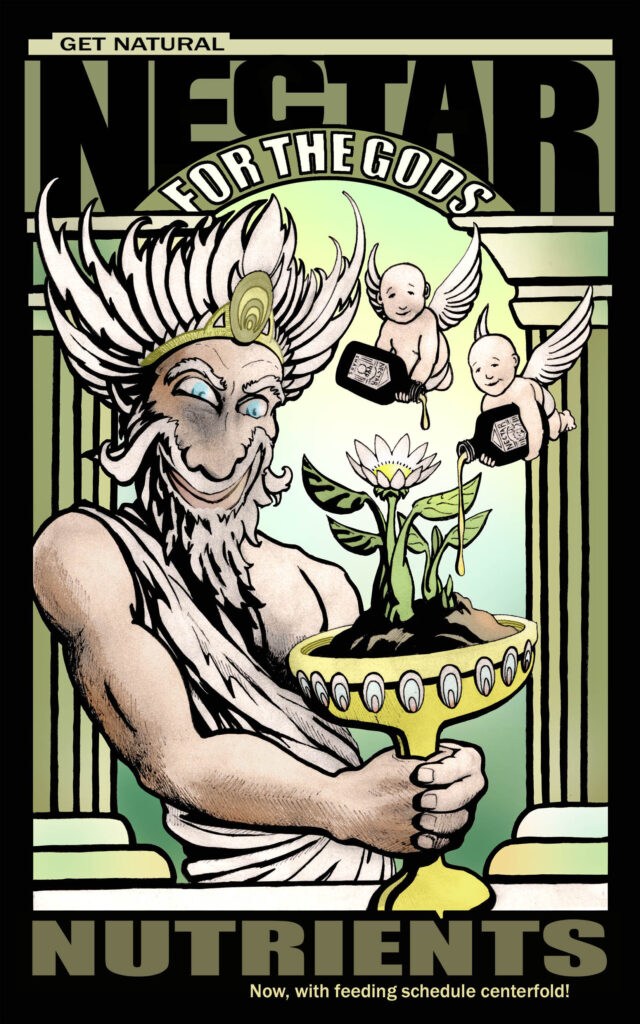
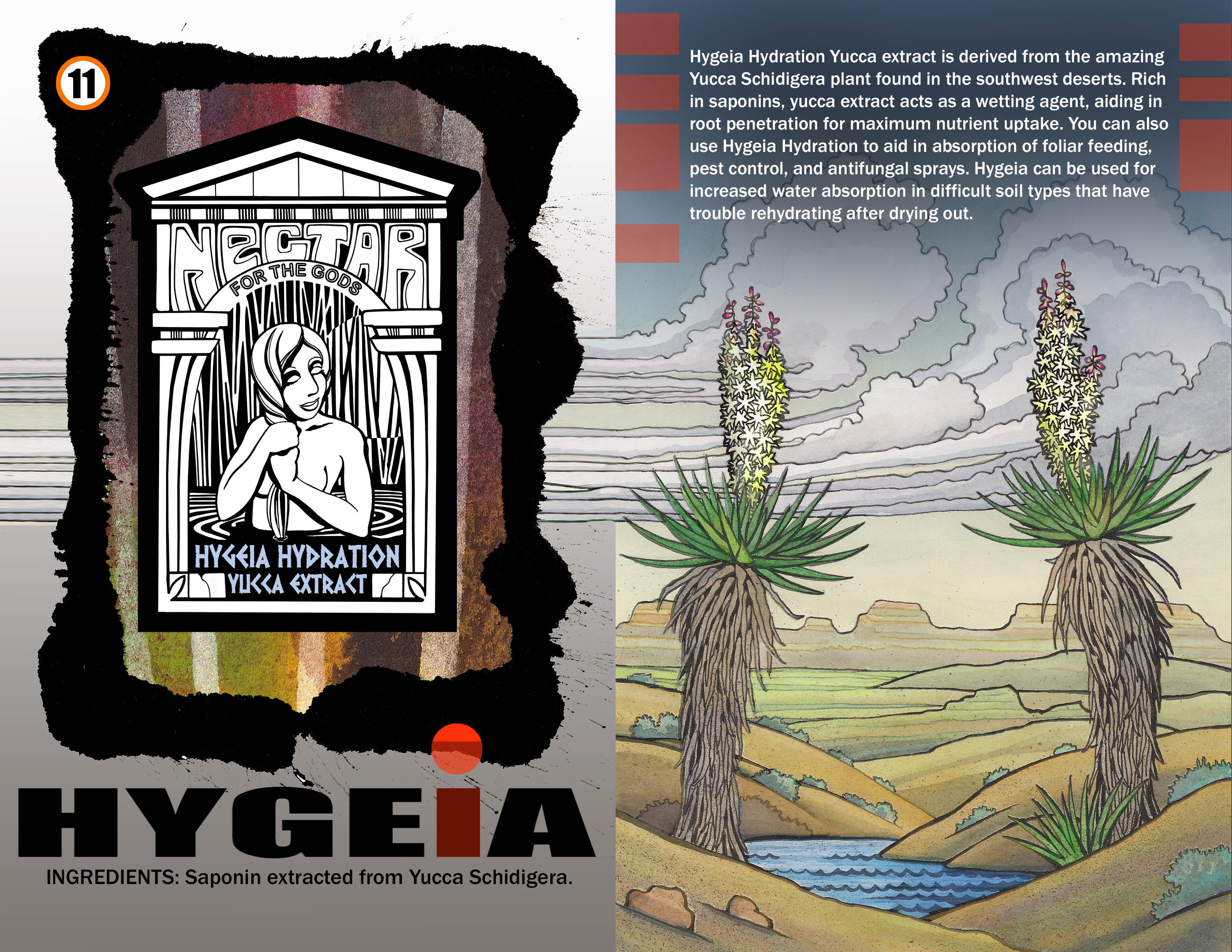
Eventually, the owner of the company commissioned me to design a product catalog. This catalog was a lot of fun to make. The cover is on the left (or above depending on your device) and a few of my favorite pages are below. I just went crazy and made all these fun, abstract watercolors, and frames. This experience made me realize the potential of combining ink, watercolor, other media, and rendering it in photoshop. Soon after I completed this project, I started my first sketches for Locust Hill.
At this point, I still lacked many technical aspects of drawing. I had only a rudimentary understanding of perspective and anatomy. Consequently, I spent a lot of time erasing and experimenting. In this image, I rely heavily on a sense of line and repetitive forms to create an image with an almost hypnotic effect. This design-oriented style was, in part, inspired by the work of Alphonse Mucha, an Art Nouveau artist I greatly admire.
I was never formally educated as an artist. I took architecture classes at the University of Oregon and some art classes at Oregon State University, but the quality of instruction was poor and I was a terrible student. I remember, distinctly, a moment when I was trying to sell art on the street and a guy looked at my pieces and said, “You’re pretty good, but I’d like to see what you could do if you put in forty hours a week. I thought, “Why would you become an artist if you wanted to work forty hours a week?” It made no sense to me at all. I dismissed him as a lunatic.
I would realize the wisdom of that man’s words much later in life as I pursued a career in illustration. I became clear that if I wanted my skills to stand out I would have to put in the time.